Personal Democracy Plus Our premium content network. LEARN MORE You are not logged in. LOG IN NOW >

In Year of Political "Big Data," NationBuilder Makes Voter Data Free

BY Nick Judd | Thursday, September 13 2012

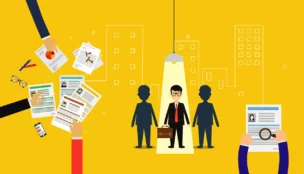
Illustration: Shutterstock

The team at NationBuilder announced Thursday that they were releasing API and limited bulk data access to a nationwide voter file with records on 170 million voters, for free.

As NationBuilder co-founder Jim Gilliam explained in a blog post, data on voters is becoming increasingly important for campaigns, advocacy organizations and researchers hoping to understand the American electorate. At the same time, U.S. voter records have two crucial and widely accepted problems.

First, the voter files, which are collected at the county level and kept at the state level, are often victims of poor management. Boards of elections frequently keep on the books voters who are dead or have moved, for example. This is not an issue for voters who have died or emigrated, but it is an issue for anyone using elections officials' tallies to make decisions about who to contact for a campaign or where to spend resources.

The second problem is that voter data is often hard to use. As public records, they are available, with restrictions and at a cost that varies from state to state. But even the best-kept voter file requires time and attention to transform into something usable for research, outreach, or planning. (Trying to find ways to weed out those dead or relocated voters, for one.) That requires some combination of technical expertise, money, or political connections.

It is in this context that NationBuilder is offering campaigns, researchers, and generally anyone whose use of the voter file would comply with applicable law, free access to that slice of the file that they need. Developers get API credentials and access to a sandbox where they can build and test applications using fake data. A campaign with data access can authorize developers to work on their behalf, allowing web applications to pull from real data on the fly as well as unlocking bulk downloads for the developer to work with elsewhere.

Open political innovation?

"I'm a developer, I've wanted to build off of this data for like a decade and it's just completely impractical because it would just cost a ton of money to bring this together, a ton of time, you wouldn't get access through all the parties, the tools are all partisan," Gilliam said Thursday. "There's no ecosystem around it. And that's really stunted the innovation in the political tech world."

NationBuilder's voter data release comes at a time when data is dominating both the study and practice of political campaigns. Most observers readily acknowledge that the 2012 presidential campaign will be decided by the outcome of a handful of battles in just a few key swing states — identified thanks to the reckoning of data scientists and pollsters. Beyond the presidential campaigns, ideological groups are looking to exert influence in state legislatures, town halls and even sewer control boards. They're doing this by matching their understanding of where they might have successful candidates against their understanding of where their foes are weak or absent, and groups like American Majority Action are deploying tools for their volunteers that provide additional intelligence about the voters they meet at every step of the way.

The kinds of tools that the Obama and Romney campaigns have developed and the predictive modeling put to use by all sides has shown the potential power this kind of campaign intelligence can unlock. It's just that in order to get to the point where you can build applications on top of useful data, right now, you probably need to have allegiance to a political party or a major outside group like a union or a PAC. And you need to be doing something they are specifically authorizing you to do.

"My feeling is that by opening this up, particularly to developers, that a whole new set of innovations, developers, and startups can emerge around it to start to solve all kinds of problems that we couldn't hack before," Gilliam explained.

In time for 2012?

It's not fully open, of course — NationBuilder is still a gatekeeper, although Gilliam explains that his company is basically trying to make sure people who use voter data are not unintentionally violating some piece of the patchwork of state voter laws in doing so. And the data has been cleaned only by checking it against a national change of address database and by picking the most recent record of each voter, meaning the voter file is nowhere near as refined as what is available through more expensive or partisan-affiliated means. Gilliam hopes that individual voters will "claim" their records through NationBuilder, verifying their registration and updating their data if it's incorrect.

The Help America Vote Act required each state to keep a state-level voter file, notes Drew Brighton, the CEO of voter data firm TargetSmart Communications and one of the companies that NationBuilder competes against. But HAVA did not offer too many specifics on what states must do to keep that file up to date and accurate, Brighton said.

"I think in spirit what they're doing is providing a service to make it more open and accessible," Brighton said, approvingly, of NationBuilder. "But having worked with data my entire career, I've always found that bad data can be a lot worse than no data at all."

He said that NationBuilder's data-cleaning methods were "a good start." But the additional work that data firms (like his, naturally) put in is necessary to bring a dataset up to modern standards, he said.

The release comes with less than 60 days to election day — not a lot of time for a campaign to adopt, learn and develop on a new platform. It does, however, come with ample time between now and early January, when the next Congress will start its session and the next presidential term begins. And voters are important as constituents in issue advocacy, too.

The product, which NationBuilder is calling their "election center," might not have arrived in time to make an impact in November. We'll see. But it is certainly fodder for the ongoing conversation about voters as data points, and data points as a kind of political commodity. The current machinery of politics is leaning heavily on the idea of information about voters being a kind of currency, like political fundraising dollars. If voter data becomes more like a commodity — available at lower cost and greater ubiquity — Gilliam's theory is that this will make democracy function better because more people will have equal access.

Many significant points about privacy aside — voter files include name, address, age, party affiliation and which elections each voter participated in — if voter data becomes a basic requirement for being an effective participant in politics, this being a democracy, shouldn't everyone have access to a clean, accurate voter file?

I posed this question to Brighton, who is in the business of delivering voter data, for a fee, to basically anyone who is not a direct opponent of the Democratic Party. (We've previously reported that TargetSmart is a licensed broker for access to the national voter file that state Democratic Parties collectively own.)

"Having spent a career selling names and addresses for a living, let's be blunt, I don't think so," he said.

Maybe some sort of census block-level aggregate thing he could get behind, he said.

"When you're actually talking about running campaigns and voter contact, influencing the future -- phone calls, direct mail, all the ways you reach out to voters, to do that right, and to actually maintain that as a long-term thing, there's actually got be some amount of money spent on that to ensure quality."

Our conversation continued. What if this became a responsibility of state boards of elections, to keep more accurate and up-to-date voter rolls?

In that case, he said, maybe. That would remove data quality as part of "the strategic advantage" that each party and ideological group now seeks to maintain, improving efficiency in communication for everyone. In the meantime, he said, would continue selling names and addresses.

News Briefs

RSS Feed friday >

Chilean Anti-Corruption Resource: A Crowdsourced Database of Social and Political Connections

In countries where a small minority of social circles have a majority of the political and economic power, personal relationships can affect major decision-making, a serious concern of anti-corruption activists. A new web platform stores personal profiles of key players in Chilean business and politics, complete with biographies and personal and professional connections through family, education, social circles, employers and coworkers, to make tracking social relationships and conflict-of-interest easier. Called Poderopedia (from the Spanish word for power), the project sounds kind of like LinkedIn, but the creation and management of profiles is being crowdsourced out to journalists, activists and concerned citizens.

GO

Middle Eastern Telecom Accused of Working With Saudi Arabia to Spy on Citizens

Mobily, an arm of the state-owned Middle Eastern telecom giant Etihad Etisalat, has been accused of working with Saudi Arabia to develop software that would allow the government to bypass protections for social media users. The exposé comes from Moxie Marlinspike (neé Matthew Rosenfield), an expert in a certain type of malicious Internet attack called MITM (man-in-the-middle), whereby attackers intercept and secretly alter private messages exchanged via email and other social media platforms. GO

Saudi Religious Leader Warns Twitter Users of Consequences in the Afterlife

In late March, Saudi Arabia's top religious cleric said Twitter was for clowns and corrupters. Earlier this week, he said anyone using social media, in particular Twitter, “has lost this world and the afterlife.” His comments might be laughable, if they did not come at a time when the Saudi government is looking into monitoring or blocking social media sites and eliminating user anonymity.

GO

thursday >

What The Other Silicon Valley Immigration Group Is Doing This Month

A bipartisan coalition of political advocacy, business and tech groups are moving ahead to launch a social media blitz next week designed to persuade members of the Senate to vote in favor of immigration reform legislation supported in Silicon Valley. "We're going to create a virtual digital storm," said Jeremy Robbins in a Wednesday ... GO

The New Yorker Hopes "Strongbox" Is a Wiretap-Proof Sieve for Leaks

The New Yorker yesterday became the first outlet to implement DeadDrop, a new system for sources to submit information to journalists online in a more secure and anonymous way than, for example, email. GO

Female Organizer of Pakistan's First Hackathon Stresses Collaboration Over Competition

After Pakistan banned Valentine's Day this year, Sabeen Mahmud started an online protest in which people uploaded photos to mock the government ban. In the weeks following she received death threats and menacing phone calls, and early on she had to stay home from work. That did nothing, however, to keep her from further organizing. Last month, the café she started in Karachi hosted Pakistan's first ever hackathon, which tackled problems including sanitation, crime, disaster management, and education. She even invited a government representative to observe the initial conversations, tackling sensitive areas like government inefficiency and elections.

GO

wednesday >

White House Innovation Fellows Project Spins Off Into A Business

Clay Johnson and Adam Becker joined the Presidential Innovation Fellows program to help the White House fix the way government does business. Now they're turning that mission into a business themselves. GO

Fighting Fires With Data, New York City Launches New Safety Inspection System

Mayor Michael Bloomberg announced today that New York City has implemented city-wide a new risk based inspection system focused on fire safety that is driven by analytics from multiple city agencies. GO

Chinese Netizens Use Digital Initiative to Gain Media Attention for Unsolved Poisoning Case

Last month a medical science student at a Shanghai university died from poisoning, allegedly murdered by his roommate. The specifics of the crime echoed a case from the mid-1990s, in which a 19-year-old student was poisoned with thallium. That case has once again been thrown into the media spotlight, but after 18 years the media has changed and the spotlight means a trending hashtag on Sina Weibo or an online petition to the U.S. President.

GO

PDF France 2013: “Au Code, Citoyens!”

This year PDF France will take place in Paris on June 13, with the theme "Au Code, Citoyens!" ("To Code, Citizens!") The speakers' lineup includes some of the continent's leaders in the digital revolution. GO

tuesday >

Website Imitation is Flattery in New York City Council Race

A New York City Council candidate who had made his name as a technology consultant and spearheaded an open government initiative several years ago found parts of his website copied by another City Council candidate in a different borough, as Politicker first reported. GO

Mike Honda Locks Up Establishment Support, But Challenger Has Ear of the Silicon Valley Elite

Some of Silicon Valley's most influential business people will hold a fundraiser in San Francisco this Thursday for Ro Khanna, the 36-year-old lawyer who's challenging 71-year-old California Democrat Mike Honda for his 17th Congressional District seat. The names at the top of the invite: Ron Conway and Sean Parker. They're apparently forming a committee to help Khanna build his campaign. The other bold-face names who are listed as part of the 'committee in formation' include Salesforce.com's Founder and CEO Marc Benioff, Benchmark Capital General Partners' Matt Cohler and Peter Fenton, tech entrepreneur Shawn Fanning, Yahoo CEO Marissa Mayer, her big data venture investor husband Zach Bogue, and Conway's SV Angel colleague, Founder and Managing Partner David Lee. GO

Tools to Keep Independent Media Online in Hostile Environments

Websites and media outlets in developing countries or countries with corrupt or repressive regimes struggle daily to fend off hacker attacks, some from their own government — like the Malaysian news portal Sarawak Report, which techPresident reported was taken down in April by sustained denial-of-service attacks. The negative attention controversial reporting draws can scare local advertisers away as well, making it difficult for a media company to support itself. Media Frontiers offers two services to websites dealing with either of those problems.

GO

monday >

Ahead of September Elections, German Pirate Party Picks Its Platform

The German Pirate Party held its election year convention over the weekend and approved its party platform, following lengthy debate over the role that online decision-making should have within the party, as German news sources reported and the party outlined on its own web platforms. GO

Peruvians Petition their President to Stick Up for their Digital Rights

Peru’s civil society advocacy groups have started an online petition outlining their ‘non-negotiable’ demands for digital rights and freedom of speech. The campaign was prompted by the controversial Trans-Pacific Partnership (TPP) agreement. Lima, Peru, will soon host the 17th round of secretive TPP trade talks, which will take place from May 15 – 24.

GO

Gun Control Advocates Take Aim At LivingSocial for Promoting Guns and Alcohol

A coalition of advocacy groups is launching a new campaign this week against the promotion of American gun culture. The campaign focuses on the daily deals site Living Social, which hasn't stopped promoting social events Hunter S. Thompson would have loved (they promote shooting off guns and letting off steam and drinking.) GO

More