Personal Democracy Plus Our premium content network. LEARN MORE You are not logged in. LOG IN NOW >

A New 'Toolkit' For Opening Up Civic Life

BY Nick Judd | Tuesday, March 1 2011

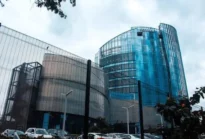
San Jose City Hall. Photo: City of San Jose

Citizens who believe their government is open and transparent are more likely to be satisfied with civic life, according to research released today by the Pew Research Center's Internet & American Life Project and the Monitor Institute.

Accompanying that research is a set of materials drafted by the Monitor Institute, a for-profit think tank and consultancy hybrid, intended to help community leaders identify how better flow of information in their communities might improve civic life, and then plan out how to create that change.

Pew and the Monitor Institute, conducting surveys and workshops in research backed by the John S. and James L. Knight Foundation, found that the belief that local government is transparent correlates with a belief that citizens can make a difference in their cities. Respondents in Philadelphia, P.A., Macon, Ga., and San Jose, Ca., who said that local government does very or pretty well at sharing information were far more likely to report feeling that they could make an impact in their community than those who did not, the survey found.

The correlations were similar with people who felt that their local news organizations did a good job of presenting diverse perspectives and covering important topics. The report also found that cell phones and broadband Internet are becoming key vectors for civic information, local government's willingness to be transparent is a key part of a healthy community, and local news outlets are important — all familiar ground for frequent readers of Knight-backed research or output from Pew, which is accumulating a growing mountain of facts that support those assertions in different ways from different groups of survey respondents.

A companion project to the report developed what Knight and the Monitor Institute call a "community information toolkit" for conducting community exercises to identify the strengths and weaknesses of a community's ability to communicate around civic issues. In an introduction to the toolkit, Knight Foundation President and Chief Executive Officer Alberto Ibargüen frames it as a means for leaders in local communities to develop more concrete strategies for improving the flow of information in their communities.

"What you have in your hands is our first draft of a 'Community Information Toolkit' designed to help you determine whether your media ecology is healthy and to understand why that matters to your work," Ibargüen writes. "It contains a simple, easy-to-use set of tools for community leaders who want to harness the power of information in identifying their communities’ strengths and in planning to address challenges."

It really is a collection of materials for community leaders like community foundation executives, a local crime watch group or the like to get their constituencies to identify the civic information they can or can't access, identify why access to information is important, and start picking strategies to open up information about their local governments and political processes.

Monitor Institute, a for-profit hybrid of a consultancy and think tank, tested out the approaches to the toolkit in Macon, Ga., San Jose, Ca., and Philadelphia, Pa. — three of eight cities the Knight Foundation pays special attention to as part of its mission. Knight keeps contacts in place there to help push forward the projects in media health and literacy and civic participation that it supports.

Ibargüen describes the toolkit as "Version 1.0," and ready to be modified and improved if other communities take it up. Beverly Blake, the program director for Knight in Macon and the leader of the workshop process there, says in an online video included in part of the toolkit materials that the workshop generated strategies that community leaders in Macon will pursue throughout this year.

While it remains to be seen if this toolkit includes the right utensils for the job of improving civic life, it represents a gesture from Knight away from dealing exclusively in the abstract and towards making concrete recommendations about how to make communities better and their politics more open and participatory.

The surveys also found that broadband users are sometimes less likely to be satisfied with community life than people who did not have broadband access. From the report:

It is not clear in these surveys why broadband connections are correlated with lower perceptions of community life and local information systems. Perhaps, as some people take advantage of broadband connections they become exposed to more critical information about local government and organizations and they become more aware of information and conversations about community problems. Perhaps, too, broadband users’ expectations are higher about the availability of information and the ease of finding it – so, they would give lower performance grades if the local information system did not meet those higher expectations.

The Pew and Monitor work, backed by Knight, elaborate upon the findings of the Knight Commission on the Information Needs of Communities in Democracy, an expert panel convened in 2008 and 2009 to issue a high-level report on media reform for the 21st century.

News Briefs

RSS Feed yesterday >

City of Joplin, Mo. Launches New Online Center Ahead of Tornado's Anniversary

The city of Joplin, Missouri launched its new web site over the week-end ahead of the May 22 anniversary of the massive tornado that devastated the city and killed 161 people. The new site enables Joplin citizens to sign up for emergency alerts via text message, e-mail and RSS. In addition to those alerts, individuals can also sign up for ... GO

In Virginia, City Council Debates to Include Questions Posed Online

The Alexandria Democratic Party in Alexandria, Virginia has partnered with online civic engagement platform ACTion Alexandria to include questions solicited in an online forum in the final Democratic primary debate for a City Council election there on June 4, ahead of the June 12 election, according to a statement released by the group. ACTion Alexandria hopes to work with both parties during the general election.

Participants in the project can add questions to the forum, or vote on questions that have already been posed, although each user is only given three votes to distribute. Users are also encouraged to use their real names. Questions submitted so far hit on topics ranging from broadband access to a ban on food trucks in the city.

GO

Motion Picture Association Names Marc Miller As Its New Online Copyright Cop

The Motion Picture Association of America on Monday named Marc Miller its vice president of online content protection. Miller comes to the MPAA from Nintendo of America, where he was the company's anti-piracy counsel for the Americas and the Asia-Pacific region. GO

friday >

Google to Charlie Rangel: You Are Dead to Me.

Rep. Charlie Rangel (D-NY) might be facing particularly challenging reelection odds this year, at least acording to Google: based on its new Knowledge Graph interface, the search engine says that the very-much-alive Congressman died on November 20, 2004, as Colin Campbell first reported for Politicker via Azi Paybarah and Anthony Adragna. GO

Roemer to Americans Elect: Thanks Anyway

Americans Elect announced recently that it would suspend its online candidate selection process, leaving organizations in several states with an open slot on the ballot. Naturally, potential candidate Buddy Roemer is not enthused. "I am taking the next few days to review with supporters how best to proceed from here," he says. GO

Chris Anderson Says That Nixed TED Talk Was Rated "Mediocre," Links To It Anyway

TED's Chris Anderson responds to criticism of how his idea-spreading operation handled a talk about inequality — and posts video of the talk online. GO

Was the "Ricketts"/Fred Davis Obama-Wright Ad Pitch a Good Deal?

As if the content of the now-discarded plan for a new Super PAC-funded attack campaign against President Barack Obama wasn't controversial enough to grab attention — it would revive attempts to link President Obama to the controversial Rev. Jeremiah Wright just before the beginning of the Democratic National Convention this summer — the now-discarded plan featured a two-page pitch for a pricey social media component meant to boost its exposure. GO

Facebook's Growing Political Importance, Visualized

To commemorate Facebook's impending IPO, the Sunlight Foundation's* reporting group has a new story chronicling Facebook's increasing political spending. Accompanying the story, though, is an instance of their Capitol Words tool that shows Facebook's increasing relevance in Congress as well. GO

More